

The pull up is unusual among gym exercises: you cannot start light. A bench press begins with an empty bar, but a pull up begins with your entire body weight, and if you cannot lift that, there is no smaller version to fall back on. That is why pull ups for beginners is less about trying harder and more about building the movement in pieces until the whole thing works.
This is a realistic eight-week approach. Some people get their first rep in three weeks, others need ten. Both are normal.
Why the first pull up is so hard
Three things have to arrive at once: enough grip to stay on the bar, enough back and arm strength to pull, and enough control in the shoulder blades to start the movement properly. Most beginners have none of the three at first, and the ones who train only by jumping up and thrashing tend to build none of them either. The fix is to train each piece with a version you can actually complete with good form.
The four movements that build a pull up
1. Dead hang
Hang from the bar with straight arms, shoulders relaxed, feet off the floor. Build grip and shoulder tolerance. Start at 10 to 15 seconds and work up. Three to five sets, resting a minute or so between them. When you can hold 45 seconds comfortably, grip is no longer your limiting factor.
2. Scapular pull
From a dead hang, without bending your elbows, pull your shoulder blades down and back so your body rises an inch or two. Pause, then release back to the hang. This teaches the single thing most beginners skip: a pull up starts at the shoulder blades, not the arms. Three sets of six to eight controlled reps.
3. Inverted row
Set a bar at roughly waist height, get underneath it, keep your body in a straight line from heels to head, and pull your chest to the bar. Raising your feet makes it harder; walking them in makes it easier. This builds the pulling strength itself in a position you can load precisely. Aim for three to five sets of six to ten.
4. Negative pull up
Jump or step to the top position with your chin over the bar, then lower yourself as slowly as you can. You are far stronger lowering a weight than lifting it, which is exactly why this works when a full rep does not. Start with descents of three to five seconds and build toward eight. Five sets of two or three reps is plenty.
How band assistance works
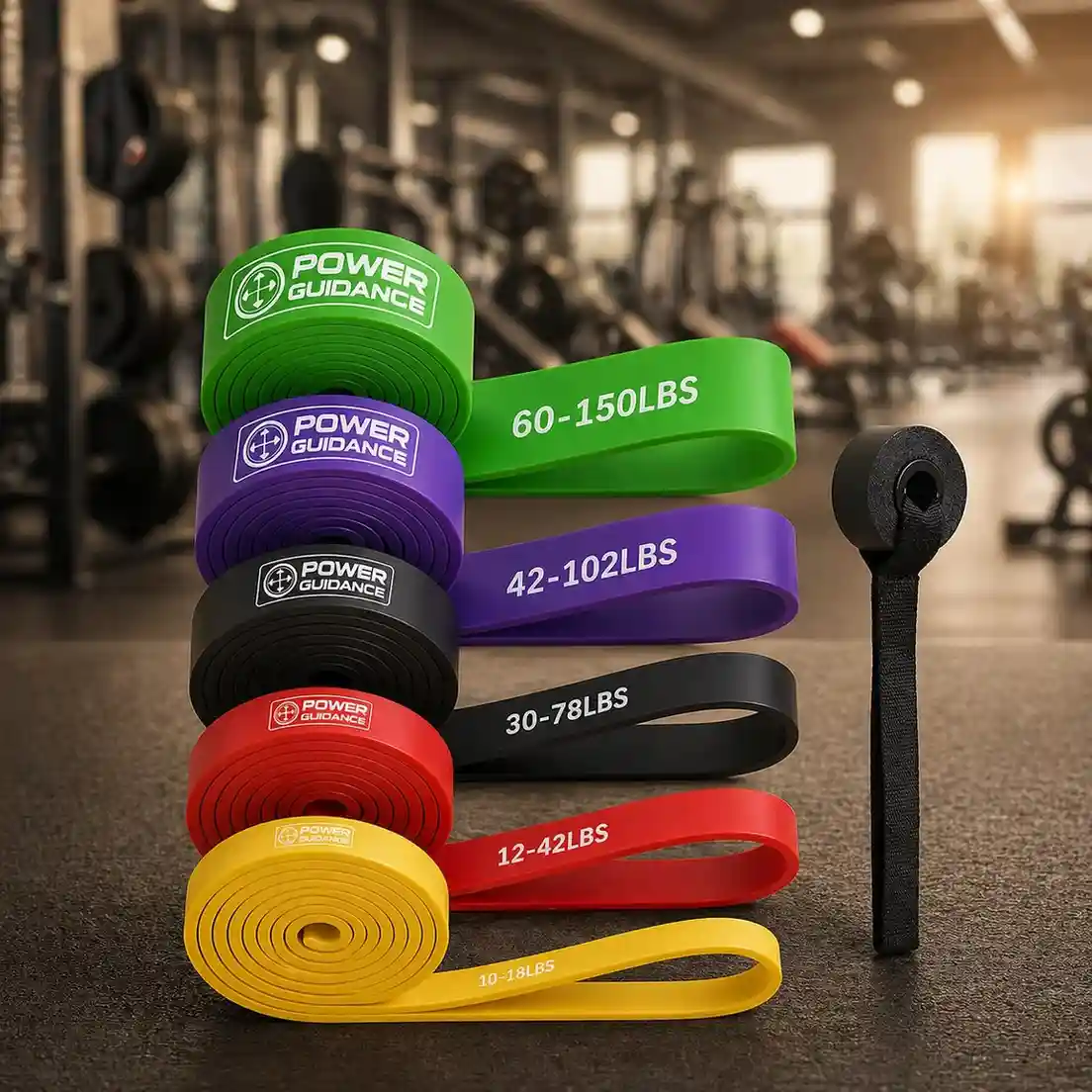
A resistance band looped over the bar and under your foot or knee stores energy at the bottom of the movement, where you are weakest, and gives most of it back as you rise. A thicker band takes more of your bodyweight off. The plan is to move through progressively thinner bands until you need none.
- Weeks 1 to 2 – heaviest band, roughly half your bodyweight assisted
- Weeks 3 to 4 – medium band, roughly 30 percent assisted
- Weeks 5 to 6 – light band, roughly 20 percent assisted
- Weeks 7 to 8 – mini band, roughly 10 percent, plus negatives
The most common mistake here is staying comfortable. If you can do more than ten clean reps with a band, that band is too thick. Drop a size. Our pull-up assist bands come in graded strengths for exactly this reason, and a resistance band set covers the rowing and accessory work in the plan.
The eight-week plan
Train three times a week on non-consecutive days, for example Monday, Wednesday and Friday. Always do your pull work first in the session, while you are fresh – not after a back workout.
Weeks 1 to 3: build the base
- Band-assisted pull ups – 4 sets of 6 to 8, resting 2 minutes
- Inverted rows – 3 sets of 8 to 10
- Dead hangs – 3 sets, holding as long as you can
- Hollow-body holds – 3 sets of 30 seconds
Weeks 4 to 6: add strength
- Drop one band size, then band-assisted pull ups – 4 sets of 5 to 6
- Negative pull ups – 3 sets of 3, with 5-second lowers
- Elevated inverted rows – 3 sets of 8
- Dead hang to scapular pull – 3 sets of 6
Weeks 7 to 8: go for the rep
- Mini-band pull ups – 3 sets of 4
- Negatives – 4 sets of 3, with 8-second lowers
- Unassisted attempts – 3 to 5 tries, fully rested, 90 seconds or more between each, every other session
Five mistakes that stall beginners
- Using a band that is too thick for too long. Comfort is the enemy of progress here. Ten-plus clean reps means it is time to size down.
- Kipping and swinging. Bouncing out of the bottom uses momentum instead of muscle. Pause at the bottom and start each rep from still.
- Pulling with arms only. Depress the shoulder blades first, then bend the elbows. This is what scapular pulls exist to teach.
- Half reps. Chin over the bar at the top, straight arms at the bottom. A partial rep trains a partial pull up.
- Training tired. Pull ups go first in the session, on a rested body, or they are just fatigue practice.
How long will it take?
Genuinely, it varies. Bodyweight, starting strength and training history all move the number. Eight weeks of consistent, progressive work gets a large share of beginners to a first strict rep; others need twelve or more. The people who get there are almost always the ones who reduced band assistance on schedule instead of staying where it felt good.
What you need
A stable bar, a set of graded assist bands, and somewhere to do inverted rows. That is the whole equipment list. Everything above is covered in our active sports gear range.
General fitness information, not personal training or medical advice. If you have a shoulder, elbow or back injury, or you are returning to training after a long break, check with a qualified professional before starting.